
Hot water Heater Preventive Maintenance
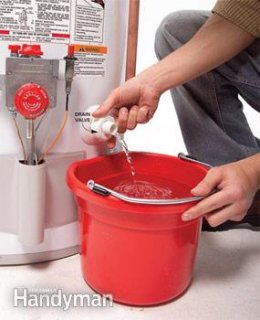
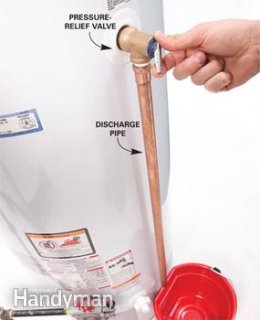
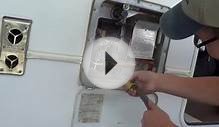
Photo 1: Check the pressure-relief valve
Place a bucket below the discharge pipe and gently lift the lever on the pressure-relief valve to test it.
Drain sediments
Open the drain valve slowly and let the water run until it's clear and free of sediments. Caution: The water is hot!
Water heaters often work perfectly for a decade or more without any care, so they're easy to neglect. But a few minutes of TLC once a year pays off by extending the tank's life span and maintaining your water heater's efficiency and safety.
First, test the pressure-relief valve located on the top or side of the water heater (Photo 1). This valve opens automatically if the pressure inside the tank gets too high. (Excess pressure can actually cause the tank to explode.) If the valve doesn't release water when you lift the lever, replace the valve (sold at home centers and hardware stores). Replacement is simple; turn off the water, drain the tank, unscrew the discharge pipe and then unscrew the old valve. Wrap the threads of the new valve with sealant tape and screw it in. If your valve is several years old and has never been tested, it might leak after you test it. In that case, replace the valve.
 Next, close the shutoff valve on the cold water supply pipe that feeds the water heater. Then turn on the hot water at any faucet to release the pressure inside the heater's tank. Leave the faucet on until you finish your work. If you have an electric heater, turn off the power at the main panel. With a gas heater, turn the gas control dial to “off.”
Drain the tank to flush out sediments that have settled to the bottom of the tank. Sediment buildup shortens the life of your water heater and adds to your energy bill by reducing its efficiency. Draining 2 or 3 gallons of water is usually enough to flush out sediments, but always let the water flow until you no longer see particles in the bucket. Caution: The water is scalding hot.
Don't worry about any gurgling or groaning noises coming from the heater; it's just air entering the system as water drains out. If the drain valve won't close tightly when you're done, drain the tank completely, unscrew the old valve and screw in a new one. To restart the water heater, open the shutoff valve and let the hot water run at any faucet to purge air from the system. Then turn on the power or relight the pilot.
Set your water heater's dial to 120 degrees F. If the dial doesn't have numbers, check the water temperature with a cooking thermometer. Higher temperatures increase sediment buildup and the risk of scalding injuries.
RELATED VIDEO
RELATED FACTS
-
 Konecranes Oyj (KCI Konecranes prior to 16 March 2007) is a Finnish company, headquartered in Hyvinkää, which specialises in the manufacture and service of cranes and lifting equipment as well as the service of machine tools. The firm produces about one in ten of...
Share this Post
Related posts

Passive Preventive Maintenance
Do you know how much impact downtime costs? According to Dunn & Bradstreet, 59% of Fortune 500 companies experience…
Read More
Preventive Maintenance Technician
This is a description of a staff position at the University of Wyoming, not a job opening announcement. Current job openings…
Read Morelatest post
-
 Ford Scheduled maintenance October 9, 2026
 -
 Preventative Maintenance car September 29, 2026
 -
 New Homes Construction Plano TX September 19, 2026
 -
 Preventive Maintenance stickers September 9, 2026
 -
 Acura TSX maintenance Schedule August 30, 2026
 -
 Preventive Maintenance Technician August 20, 2026
 -
 Industrial Maintenance Coatings August 10, 2026
 -
 Industrial Maintenance Electrician July 31, 2026
 -
 New Homes Construction Raleigh NC July 21, 2026